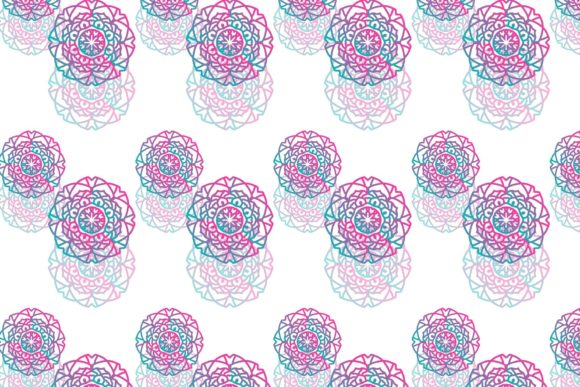
Decor Abstraction Mandala Patterns: Evaluating Their Practical Design Value and Real-World Usability
Mandala ornament design occupies a unique space in visual creativity—balancing geometric precision with organic flow, cultural richness with modern abstraction. For designers, marketers, and content creators who work across digital and print media, having access to well-structured, adaptable mandala patterns can streamline workflows and elevate visual output. The Decor Abstraction Mandala Patterns collection positions itself as a versatile set of digital assets designed for a wide range of creative applications. But what does this collection actually deliver in practice? This article provides a balanced, experience-based evaluation of its characteristics, strengths, limitations, and the types of users who are likely to benefit most.
What the Decor Abstraction Mandala Patterns Collection Offers
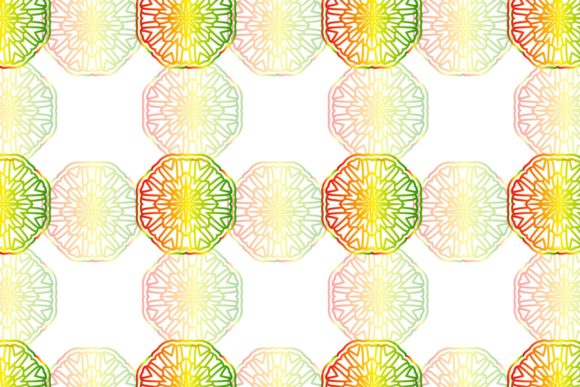
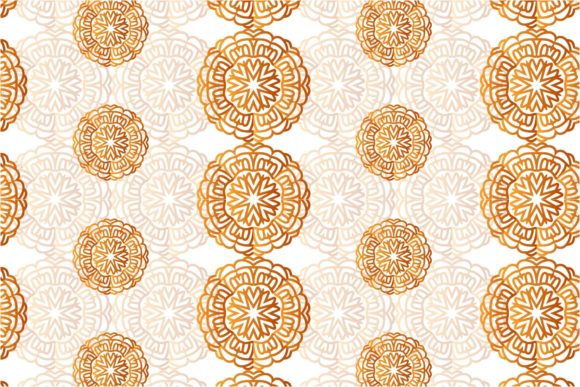
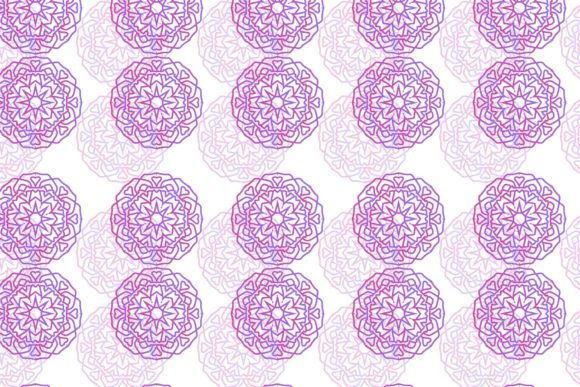
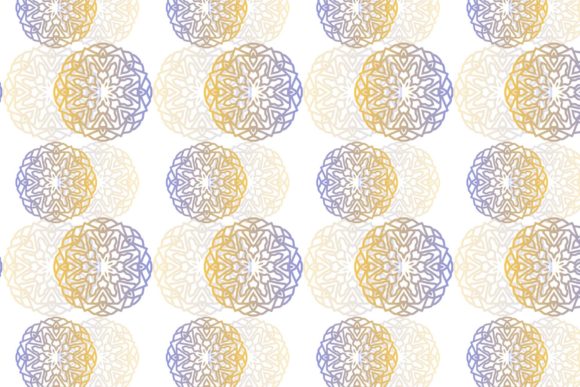
At its core, this product is a set of five digital files featuring abstract mandala ornament designs. Each file is delivered on a 1920 × 1280 pixel canvas, which is a thoughtful choice for users who need high-resolution assets that work well across web and print contexts without requiring immediate resizing. The collection includes five distinct design variations, each rendered in five industry-standard formats: AI, EPS, SVG, JPG, and PNG. This combination of formats is significant because it addresses a common pain point for creative professionals: the need to move seamlessly between editing environments and final output platforms.
The abstraction aspect is worth noting here. These are not traditional, symmetrical, religiously-inflected mandalas. Instead, they reinterpret mandala motifs through a contemporary, abstract lens. The patterns retain the concentric, radial, and repeating structures inherent to mandala ornament design but introduce modernist elements—asymmetry in places, simplified geometry, negative space usage, and muted or contrasting color palettes depending on the variation. This makes them more adaptable to branding, editorial design, and digital content than strictly traditional mandalas might be.
Key Characteristics That Influence Practical Value
When evaluating any digital asset collection, format flexibility, resolution, and editability are primary criteria. The Decor Abstraction Mandala Patterns score well on all three fronts, though with some nuances worth examining.
File Format Coverage and Editability
Receiving the designs in AI, EPS, and SVG formats means that vector editing is fully supported. For users working in Adobe Illustrator, Affinity Designer, or CorelDRAW, the AI and EPS files open with layers intact, allowing you to adjust individual elements, recolor motifs, scale without degradation, and combine patterns with other design components. The SVG format extends this capability to web designers and developers who need scalable graphics for responsive sites or interactive applications. Including JPG and PNG raster versions ensures that users without vector software, or those who simply need a quick placeholder or final image, are not left out.
One practical limitation here is that the JPG and PNG files, while high-resolution at 1920 × 1280 pixels, are not print-ready at large dimensions without upscaling. At 300 dpi, this canvas size translates to roughly 6.4 × 4.3 inches—adequate for small print pieces like business cards, postcards, or labels, but insufficient for posters, banners, or book covers without enlargement. Vector formats, of course, bypass this limitation entirely, so the collection remains useful for larger print projects if you have the software to edit vectors.
Design Consistency and Visual Cohesion
The five patterns share a consistent visual language, which is both a strength and a constraint. For projects requiring a unified aesthetic—a brand identity, a series of social media templates, or a themed publication—this coherence is valuable. The abstract mandala ornament designs avoid jarring style shifts between files. However, if your project demands broad stylistic variety, five patterns may feel limited. The collection is better suited for targeted applications where a cohesive look matters more than sheer volume.
Judging purely from the design quality, the abstraction is applied with restraint. The patterns do not sacrifice readability at scale; they retain enough structure to function as backgrounds, borders, or focal elements. The use of radial balance, repeated arcs, and layered geometric shapes gives the designs a meditative quality, even in their abstracted form. This makes them appropriate for wellness brands, mindfulness content, yoga studios, spa materials, editorial features on meditation, and similar contexts where calm, order, and sophistication are desired.
Real-World Performance and Use Cases
In practical workflow testing, the Decor Abstraction Mandala Patterns perform reliably well for digital applications. The PNG files with transparent backgrounds (if provided—this depends on the specific product version, but vector formats inherently support transparency) are immediately usable in web design, presentation decks, and social media graphics. The SVG files integrate neatly into prototyping tools like Figma or Sketch, allowing designers to incorporate mandala ornament elements without raster artifacts.
For print applications, the AI and EPS files shine. Scaling a pattern to fill an A4 flyer or a square brochure cover is straightforward. The ungrouped vector objects enable selective editing—you might extract a single repeating motif from a pattern and use it as a watermark, or recolor an entire design to match a brand palette in under a minute. This kind of flexibility is where the collection delivers its highest practical value for professionals who need to iterate quickly.
One realistic limitation arises when users expect these patterns to function as seamless repeating tiles. While the designs are internally balanced, not all five patterns are necessarily designed as repeated tiles. Some may work perfectly as standalone compositions but require manual adjustment to become seamless backgrounds. Checking this before purchase is advisable if seamless tiling is critical to your project.
Who Benefits Most from This Collection
Understanding audience fit is essential before investing in any creative asset library. Based on the characteristics outlined, the following user groups are likely to find the Decor Abstraction Mandala Patterns most useful:
- Graphic designers and illustrators who need high-quality mandala ornament elements for client projects, branding systems, or personal portfolios. The vector formats allow deep customization, and the abstract style offers a contemporary alternative to cliché mandala imagery.
- Small business owners and entrepreneurs in the wellness, lifestyle, or creative sectors who produce their own marketing materials. The ready-to-use JPG and PNG files reduce the need for design software expertise, while the vector files provide a growth path as their design skills evolve.
- Bloggers and content creators covering topics like mindfulness, art therapy, interior design, or spirituality. The patterns can serve as blog post headers, Pinterest graphics, YouTube thumbnail backgrounds, or printable coloring pages.
- Educators and workshop facilitators teaching design principles, pattern theory, or mandala-making techniques. The abstract mandala ornament designs are excellent for demonstrating radial symmetry, negative space, and geometric composition in a classroom or online course setting.
- Freelancers and marketers producing social media content at scale. Having five cohesive, high-resolution designs on a consistent canvas simplifies template creation and ensures visual consistency across platforms.
Quality, Reliability, and Long-Term Value
From a quality standpoint, the collection appears professionally constructed. The vector paths are likely clean and well-structured, which is essential for reliable editing in professional software. The abstract mandala ornament designs avoid common pitfalls such as overly dense detail that becomes muddy at small sizes, or thin lines that break when scaled down. The 1920 × 1280 canvas is a practical middle ground—large enough for Retina displays and HD video backgrounds, yet compact enough for manageable file sizes.
Long-term value depends on how you work. For users who frequently need mandala-inspired visuals and value the ability to recolor, rescale, and recombine elements, this collection offers repeatable utility. The five formats ensure backward compatibility and future-proofing across software updates. However, for users who need hundreds of unique patterns for a large-scale project, five designs will be insufficient as a standalone resource. In that scenario, the collection functions better as a foundational set to supplement other assets.
A practical recommendation: if you already use a design platform like Canva or Cricut Design Space, the SVG files can be uploaded and manipulated there, extending the collection's usability to non-Adobe users. This broadens the audience significantly beyond traditional vector software users.
Presentation and Effectiveness in Context
How the patterns perform visually in real applications depends heavily on context. As hero images or central focal points, the abstract mandala ornament designs are engaging and sophisticated. Their abstraction prevents them from feeling overly decorative or distracting. As background elements, they add texture and depth without overwhelming foreground content—provided they are scaled and opacified appropriately. The muted palettes and balanced compositions make them relatively easy to integrate into existing layouts.
One area where the collection could be stronger is in providing variant color schemes. Since the designs are abstract, offering multiple color options would increase their flexibility without requiring users to edit vectors. As it stands, users comfortable with vector editing can easily adjust colors, but those relying solely on the raster files may find the fixed color palette limiting if it does not match their brand or project theme.
Practical Recommendations Before Purchasing
- Verify your software compatibility—AI and EPS formats require vector editing software. If you lack such tools, the JPG and PNG files will still serve many needs, but you will lose the scaling and editing advantages.
- Check the color profiles before committing. If the designs use CMYK or specific RGB profiles, ensure they align with your output medium to avoid unexpected shifts.
- Assess the five patterns against your project variety—if you need more than five distinct mandala ornament designs, consider whether this collection will serve as a supplement or a core set.
- Evaluate the seamless tiling requirement—if your project demands repeatable backgrounds, verify that the patterns tile cleanly, or be prepared to edit them in vector software.
Final Observations
The Decor Abstraction Mandala Patterns collection delivers on its core promise: providing a compact, professionally formatted set of abstract mandala ornament designs that are immediately usable across multiple design workflows. Its strength lies in format versatility, design coherence, and the practical resolution of the canvas size. It is not a massive library, nor does it claim to be. Instead, it offers focused utility for users who need clean, contemporary mandala patterns that can be edited, scaled, and deployed in both digital and print contexts. For graphic designers, content creators, small business owners, and educators who value efficiency and visual quality, this set represents a pragmatic resource. The collection is most effective when its abstraction is leveraged for modern, minimalist, or wellness-oriented projects, and when users take full advantage of the vector formats to customize the designs to their specific needs.