Seamless Patterns with Natural Elements
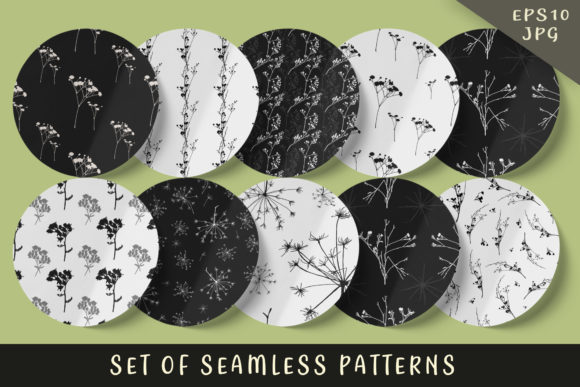
When you open a ZIP folder containing ten JPG files at 3600x3600 pixels and ten EPS10 vector files, you are not simply acquiring decorative assets. You are gaining a structured visual system. A set of black and white seamless patterns with natural elements offers repeatable, scalable, and clean motifs that can be woven into nearly any creative or commercial project. The question is not whether these patterns are beautiful, but how you can use them to achieve specific outcomes. Strategic use of Seamless Patterns with Natural Elements can support branding, content production, customer experience, and long-term creative planning when approached with intention rather than impulse.
Why Natural Element Patterns Support Thoughtful Visual Strategy
Patterns derived from natural motifs, such as leaves, branches, water ripples, stones, or organic textures, carry an inherent visual calmness and authenticity. Black and white execution removes the distraction of color, letting form, contrast, and repetition do the work. For entrepreneurs, marketers, and creators, this means the patterns can be layered into existing designs without clashing with brand color palettes or introducing visual noise. A well-chosen seamless pattern can act as a background, a border, a texture overlay, or a structural grid element. It is not decoration for its own sake, but a deliberate visual tool that reinforces messaging and mood.
From a planning perspective, having a set of ten coordinated natural element patterns gives you flexibility without overwhelming choice. Each pattern can serve a different purpose, and the set allows for consistency across a campaign or product line. Whether you are designing a website, packaging materials, editorial layouts, or social media assets, the black and white aesthetic ensures the patterns remain timeless and adaptable across seasons and trends.
For Brand Identity and Positioning
Brand identity is built on consistent visual cues. If your business operates in wellness, sustainability, education, or creative services, organic patterns can communicate a grounded and thoughtful brand personality. Using Seamless Patterns with Natural Elements as a secondary visual element on business cards, letterhead, or website backgrounds adds texture to your brand without requiring a full redesign. The key is to choose patterns that align with your brand values. A leaf motif suggests growth and nature, while a water pattern implies flow and calm. By matching the pattern to your positioning, you make the visual choice meaningful rather than decorative.
A practical step is to assign one primary pattern for brand backgrounds and a secondary pattern for accent sections. This creates a visual hierarchy that supports readability and brand recall. For small business owners, this approach avoids the cost of custom illustration while producing a professional result.
For Content Creation and Communication
Content creators and bloggers often need to produce visual consistency across multiple posts, guides, or lead magnets. A set of seamless natural patterns can be used as section dividers, quote backgrounds, or subtle overlays on images. The black and white format works well with both dark and light layouts, reducing the need to adjust contrast for each use. For educators and publishers, these patterns can serve as slide backgrounds for presentations, worksheet borders, or cover designs for digital and print materials.
When planning a content series, you can assign each pattern to a specific topic or content pillar. This creates a visual language that your audience begins to recognize over time, improving engagement and retention without requiring additional explanation.
For Product Packaging and Customer Experience
Product packaging is a tangible touchpoint where visual decisions directly affect customer perception. A black and white natural pattern on packaging can signal simplicity, quality, and environmental awareness. The seamless repeat ensures the pattern flows naturally across boxes, labels, and wrapping paper without awkward seams. The high resolution of 3600x3600 pixels means the pattern can be printed at large sizes without losing sharpness, which is critical for packaging applications where detail matters.
Entrepreneurs launching new product lines can use the EPS10 files to scale the patterns infinitely without quality loss. This is particularly useful for prototyping and small-batch packaging runs, where you may need to adjust pattern size to fit different package dimensions. The vector format also allows you to change line weights or simplify details if the pattern needs to hold up at very small scales.
Matching Pattern Style to Intended Outcome
Not every natural pattern fits every project. A dense, intricate leaf pattern might overwhelm a small logo lockup, while a simple dot or line motif could feel too sparse as a full-page background. Before you begin designing, list the specific materials you need to create, and evaluate which pattern density works best for each. Open the JPG files in your software, scale them to your actual usage size, and test readability. This step alone prevents the common mistake of choosing a pattern that looks good on screen but fails in practical application.
File Format Considerations
The ZIP folder includes both JPG and EPS10 files. The JPG files are raster images at high resolution, suitable for digital use and standard printing. The EPS10 files are editable vector art, which allows you to modify the pattern's scale, stroke thickness, or individual elements. For long-term flexibility, keep the EPS10 files as your source files and export JPG copies for specific outputs. If you anticipate future changes to your brand or project, the vector format saves you from having to repurchase assets.
For freelancers and agencies managing multiple clients, the EPS10 format also makes it easy to adjust the pattern to match each client's brand guidelines. You can rotate elements, change line color to a brand-specific black or dark grey, or combine patterns from the same set to create unique composites.
Scale and Resolution Planning
The 3600x3600 pixel resolution at 300 DPI prints cleanly up to about 12x12 inches. If you need to cover larger surfaces such as wallpapers, banners, or trade show backdrops, use the EPS10 files to scale up without pixelation. Always test a small section of the pattern at full scale before committing to a large print run. Black and white patterns can reveal moiré effects or unintended visual artifacts if scaled improperly. A proactive check saves materials and production time.
What to Consider Before Committing to a Pattern Set
Even a well-designed pattern set is not automatically right for every project. Begin with a clear definition of your visual objective. Are you trying to convey a natural, organic feel, or do you need a neutral texture that fades into the background? The answer determines whether you should use the pattern prominently or as a subtle supplement. If your goal is to reduce visual clutter, choose a pattern with lower density and softer lines. If you want the pattern to be a signature element, go with a motif that stands out and repeats in a memorable way.
Another consideration is the audience. In professional or academic contexts, overly decorative patterns may undermine credibility. For example, a conference presentation or a corporate report might benefit from a simple line-based pattern rather than an elaborate floral motif. Test your design with a small group of stakeholders or clients before full deployment. This small step can reveal whether the pattern supports or distracts from your message.
Budget is also a factor. A pre-made pattern set like this is cost-effective compared to custom illustration, but it still requires time to integrate correctly. Factor in the hours needed to test, adjust, and apply the patterns across your materials. Rushing this process leads to inconsistent results that weaken rather than strengthen your visual identity.
Practical Examples of Intentional Use
Imagine you are a small business owner launching a new line of natural skincare products. You can use one of the leaf or plant-based patterns from the set as the primary background for your product labels. The same pattern repeated across your website hero section creates a consistent brand experience. Meanwhile, a simpler geometric natural pattern from the set serves as the backdrop for your educational blog posts about ingredients. Each pattern reinforces the natural theme without requiring complex illustration software skills.
For a freelance graphic designer building a portfolio website, a subtle rock or wood-inspired pattern from the set can be used as a textured background for project thumbnails. The black and white aesthetic keeps the focus on the work while adding a handcrafted feel to the layout. The EPS10 files allow you to adjust the pattern transparency and scale so it integrates smoothly with your existing grid system.
In a publishing context, an online magazine focused on sustainability can use the patterns as consistent visual elements for quotes, pullouts, and section headers. Over time, readers begin to associate the pattern with the brand, increasing recognition and loyalty. The key is to apply the same pattern in the same context across all issues or posts. Repetition builds visual memory.
The Risks of Using Patterns Without Strategic Context
Using Seamless Patterns with Natural Elements without a clear purpose can dilute your message rather than enhance it. A common mistake is applying a pattern to every surface, making the design feel busy and unfocused. This happens when the pattern is chosen for its aesthetic appeal alone, without considering how it interacts with text, images, or other design elements. The result can be reduced readability, longer loading times, and a perception of unprofessionalism.
Another risk is inconsistency. If you use one pattern from the set on your homepage and a different, incompatible pattern on your landing pages without a logical reason, visitors may not connect the two. This breaks the visual thread that supports brand recognition. Define which patterns belong to which application before you start designing. Write a simple guideline: header backgrounds use pattern A, divider lines use pattern B, and product imagery uses pattern C. This small rule prevents drift and keeps your design intentional.
There is also a risk of pattern fatigue. Even the best natural element patterns can feel repetitive if they appear too often in the same space. Use the patterns as accents rather than defaults. Allow white space and neutral areas to balance the visual weight. Your audience should notice the pattern as a subtle part of the experience, not as the main event.
How to Integrate Patterns Into Long-Term Creative Workflows
To make the patterns a sustainable part of your creative process, store the ZIP file contents in a clearly labeled folder structure. Separate the JPG and EPS10 files, and add a simple text note describing each pattern's name, style, and recommended use case. This saves time when you revisit the set months later for a new project. If you are working with a team, share the folder along with usage guidelines so everyone applies the patterns consistently.
Consider creating a master template file in your design software that places the patterns at various common sizes and opacities. From this template, you can generate backgrounds, overlays, and dividers quickly without re-importing and rescaling each time. This workflow reduces repetitive tasks and leaves more time for creative strategy.
Finally, evaluate the patterns periodically against your current brand or project goals. Visual trends evolve, and what feels aligned today may not fit next year. The advantage of a black and white natural element set is its timelessness, but your application should still serve the message. If a pattern no longer supports your outcome, retire it and introduce another from the same set. This keeps your visual language fresh without abandoning the system entirely.
Final Perspective on Pattern-Driven Design Decisions
Seamless Patterns with Natural Elements, especially those offered in both high-resolution JPG and scalable EPS10 formats, are valuable assets for anyone who creates visual content. They are not shortcuts to good design, but tools that reward thoughtful planning. Whether you are an entrepreneur building a brand, a marketer producing campaign assets, an educator preparing learning materials, or a freelancer delivering client work, the patterns can support your goals when used with clear intention.
Start by defining what you need the pattern to communicate. Match its density and motif to the function it will serve. Test across applications, document your choices, and remain flexible as projects evolve. The difference between a design that feels generic and one that feels grounded often comes down to whether the visual elements were chosen for a reason. With a structured approach, these natural element patterns become a reliable part of your creative toolkit, not just another download.