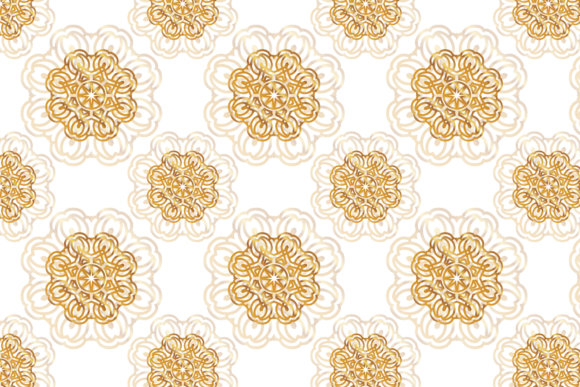
The Enduring Allure of Mandala Indian Ethnic Patterns in Modern Design
Few visual motifs carry the weight of history and the flexibility of modern expression quite like Mandala Indian ethnic patterns. These intricate, circular designs have transcended their ancient spiritual roots to become a staple in contemporary digital art, branding, textile production, and personal creative projects. Whether you are a seasoned graphic designer or a hobbyist exploring new aesthetics, understanding the depth and utility of these patterns can transform your work. The beauty of a mandala lies not just in its symmetry, but in its ability to convey balance, unity, and a sense of the infinite—all within a single frame.
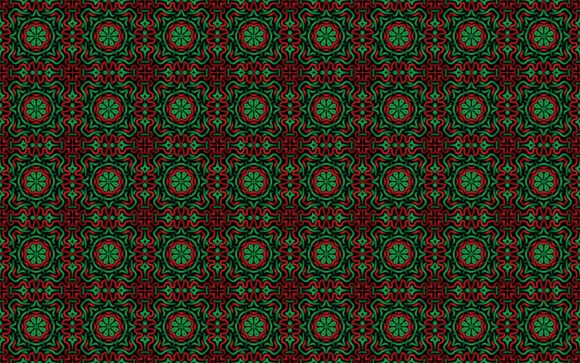
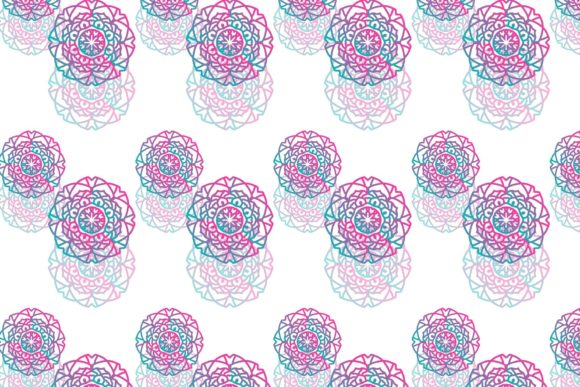
For anyone looking to integrate these designs into their workflow, the right digital assets make all the difference. A well-crafted set of files, such as a collection that includes 5x digital files on a 1920px by 1280px canvas, provides the flexibility needed to adapt the artwork across various mediums. Having access to formats like AI, EPS, SVG, JPG, and PNG ensures that you can move seamlessly from vector editing in professional software to direct printing or web use without losing quality or detail.
Understanding the Anatomy of Mandala Indian Ethnic Patterns
At its core, a mandala is more than just a pretty circle. The term itself comes from the ancient Indian language of Sanskrit, meaning "circle." However, the circle is just the beginning. Mandala Indian ethnic patterns are characterized by a series of concentric rings, radial symmetry, and repeating geometric shapes. These elements often include lotus petals, intricate tessellations, floral motifs, and symbolic icons that radiate outward from a central point.
What makes these patterns so compelling for modern design is their inherent structure. The symmetry provides a natural focal point, drawing the viewer's eye inward. This makes them exceptionally effective for logo design, album covers, home decor accents, and even user interface backgrounds. The level of detail in authentic ethnic patterns can range from bold and simple to incredibly fine and complex, offering options for nearly any visual style.
Why Digital Versatility Matters
When you acquire a design package for Mandala Indian ethnic patterns, the variety of file formats is not just a bonus—it is a necessity. Consider the difference between a JPG file and an SVG file. The JPG is perfect for quick previews, social media posts, or rendering a soft background texture. The SVG, on the other hand, is a vector format. This means you can scale the mandala to the size of a billboard or shrink it down for a business card without any pixelation.
Similarly, the EPS and AI files are industry standards for professional graphic design software like Adobe Illustrator. These formats preserve the layers, paths, and editable elements of the design. If you want to change the color of a specific petal ring or remove an outer border, you can do so with absolute precision. The PNG file often comes with a transparent background, which is indispensable for placing the pattern over photographs, dark backgrounds, or layering it with other elements without a white box around it.
Practical Applications Across Creative Industries
The use of Mandala Indian ethnic patterns is no longer confined to spiritual iconography or traditional art prints. Today, these designs are everywhere, and for good reason. They evoke a sense of order, craftsmanship, and cultural richness that is hard to replicate with simple geometric shapes.
Branding and Logo Design
A mandala-based logo instantly communicates depth, tradition, and attention to detail. Businesses in the wellness, yoga, spa, and organic product industries frequently use these patterns to establish trust and a calming aesthetic. A digital file set that allows you to edit the colors and scale of the pattern means you can tailor it precisely to a brand's color palette. You can take a base pattern from your 1920px x 1280px canvas and extract a small, elegant section to use as a monogram or a full radial design for a website header.
Textile and Surface Pattern Design
Fashion designers and surface pattern designers often require high-resolution files to create seamless repeats. While a single 1920px x 1280px canvas might not be a full fabric repeat, it serves as an excellent tile or hero motif. You can import the SVG or AI file into pattern-making software, repeat it, and adjust the scale. The clarity of the vector format ensures that the fine lines of the mandala remain crisp when printed on fabric, wallpaper, or ceramic ware.
Digital Content and Web Design
For digital creators, mandalas are fantastic for creating engaging content. A PNG file with a transparent background can be used as an overlay on videos, a frame for Instagram stories, or a decorative element on a landing page. The symmetrical nature of Mandala Indian ethnic patterns also makes them ideal for loading screens, animated SVGs, or interactive graphics where the design spins or pulses. Because the canvas size is standardized at 1920px x 1280px, it aligns well with standard screen resolutions, making it easy to preview how the design will look on a desktop monitor.
Key Characteristics of High-Quality Mandala Assets
Not all digital mandala files are created equal. When selecting a set for your projects, there are specific qualities to look for that will save you time and frustration.
- Vector Integrity: The AI, EPS, and SVG files should contain true vector paths, not embedded raster images. This ensures infinite scalability.
- Canvas Consistency: A uniform canvas size, such as 1920px x 1280px, provides a predictable workspace. You know exactly how the art is framed and can plan your layouts accordingly.
- Clean Geometry: Professional mandalas have precise symmetry. There should be no jagged lines or misaligned nodes in the vector files.
- Layer Organization: In the AI file, layers should be named or grouped logically (e.g., "outer ring," "petal layer," "center dot"). This makes editing colors and elements straightforward.
- Transparency Options: The PNG file should ideally have a transparent background. This is a standard expectation for design assets, allowing you to drop the pattern onto any color or image.
How to Integrate These Patterns into Your Workflow
Let's consider a practical scenario. You are designing a poster for a wellness retreat. You have purchased a set of Mandala Indian ethnic patterns. Here is a simple workflow using the provided files:
- Start with the AI or EPS file. Open it in Illustrator. The design is perfectly framed on a 1920px x 1280px artboard.
- Customize the color palette. Perhaps the original design uses deep reds and golds, but your retreat brand uses sage green and soft beige. Because the layers are editable, you can select the outer petals and change their fill color in seconds.
- Export for different uses. Once you are happy with the color, you can export a high-resolution JPG for the printer. Simultaneously, you can export a PNG with a transparent background to place on the retreat's website.
- Scale for specific elements. Need a small icon for the top of a brochure? Copy the SVG into a new document and scale it down. The lines remain razor-sharp.
This flexibility is the core advantage of having a complete file package. You are not locked into one specific use case. The same pattern that adorns a printed banner can be the subtle background of an email newsletter.
Observations on Style and Versatility
One of the most interesting aspects of working with Mandala Indian ethnic patterns is their chameleon-like ability to fit into different design movements. A highly detailed, monochromatic mandala can look strikingly modern and minimalist when used as a large, faint watermark. Conversely, a colorful, multi-layered pattern can be the centerpiece of a bohemian or maximalist design scheme.
This adaptability makes them a wise investment for any designer's library. Instead of searching for a different asset for every project, you can rely on a core set of mandalas and manipulate them to fit the mood. The included JPG file is particularly handy for testing. You can quickly drop it into a mockup to see if the scale and density of the pattern feel right before committing to vector edits.
It is also worth noting the inherent cultural significance. When using Mandala Indian ethnic patterns, it is respectful and beneficial to understand their origins. They represent the universe, wholeness, and a cosmic diagram reminding us of our relation to the infinite. Using them with intention—rather than as an afterthought—adds depth to your work. This is why having a high-quality, accurately rendered digital file is important. It honors the precision and complexity of the original art form.
Recommendations for Beginners and Professionals
If you are new to using mandalas in your designs, start with the PNG or JPG files. These are the easiest to use in programs like Canva, Photoshop, or even PowerPoint. Drop the design onto a solid background and experiment with blending modes and opacity. Once you feel comfortable, graduate to the SVG or AI files to learn how to tweak the vector paths.
For professionals, the AI and EPS files are your primary tools. Use these to build complex compositions. Because the canvas size is 1920px x 1280px, you can use these assets as the hero image for a slide deck, a YouTube thumbnail background, or a large format print. The fact that the design is delivered in multiple formats means you can collaborate with other designers or print shops without worrying about software compatibility.
Final Considerations for Choosing Your Digital Assets
When browsing for Mandala Indian ethnic patterns online, the technical specifications matter just as much as the aesthetic appeal. A set that provides 5x digital files with a consistent canvas size of 1920px x 1280px offers a predictable and reliable resource. You know exactly what you are getting in terms of resolution and aspect ratio. The inclusion of both raster (JPG, PNG) and vector (AI, EPS, SVG) formats covers every possible need, from web use to large-scale printing.
Look for designs that have clean, uninterrupted lines. The spiritual and visual power of a mandala comes from its flawless symmetry. A single broken path or a misaligned curve can ruin the hypnotic effect. High-quality files will have been carefully constructed, often by artists who specialize in this specific discipline.
Thank you for visiting our store and considering the integration of these timeless patterns into your creative projects. Whether you are creating a logo, decorating a space, or building a digital brand, the Mandala Indian ethnic patterns you choose will bring a sense of balance and cultural richness to your work. The right set of files is more than a purchase—it is an investment in the depth and quality of your visual language.